Not a bird, not a plane and it is not Superman

This craft did not just disappear, it faded away. You can make out the silhouette or ghost image that is the shape of the craft in the next frame
The same object appears four times across this clip at regular intervals — then vanishes completely between each appearance. It is not slowing down. It is not hiding behind clouds. It is cycling in and out of visible detection while maintaining a consistent trajectory. We do not have an explanation for this behavior.
The Pais Patent and the November 6 Anomaly: A Morphological and Physical Comparison
In 2018, the US Patent and Trademark Office granted Patent US10144532B2 to inventor Salvatore Cezar Pais of the US Department of the Navy. The patent describes a craft using an inertial mass reduction device — a vehicle that achieves propulsion not through conventional thrust mechanisms but by manipulating the quantum vacuum state in the immediate vicinity of the craft. The patent specifies the use of high-frequency electromagnetic field generators creating intense fields that interact with the local vacuum energy state, producing what the patent describes as a polarized vacuum sheath around the craft. This sheath allows the craft to operate with reduced inertial mass, enabling extreme speeds and maneuvers that would be impossible for conventional aircraft.
The patent is not theoretical speculation by a fringe inventor. It was filed by a Navy aerospace engineer, granted by the USPTO, and assigned to the Department of the Navy. Whether the technology described has been built, tested, or deployed is not addressed in the patent itself. What the patent provides is a specific theoretical framework that predicts particular physical signatures: a plasma envelope around the craft caused by atmospheric ionization from the high-energy fields, non-linear optical distortion in the vicinity of the craft caused by vacuum polarization effects, anomalous spectral emissions in the blue-violet range corresponding to nitrogen and oxygen ionization, and unconventional motion profiles consistent with mass reduction.
On the morning of November 6, 2025, the systematic observation program operating from this fixed-point position in eastern Pennsylvania captured an aerial anomaly that has been subjected to multi-vector analysis against the predictions in the Pais patent. The analysis was conducted through cross-architecture AI collaboration with explicit methodological safeguards, including environmental artifact filtering, differential spectral measurement, geometric persistence verification, and edge gradient intensity testing for non-linear distortion patterns. Four independent measurement vectors emerged from the analysis, each showing consistency with patent-predicted signatures.
The morphological features of the observed object — an elongated dark body with a forward conical protrusion, an underside cylindrical structure, and a surrounding atmospheric disturbance — correspond to the structural elements described in the patent. The spectral signature of the surrounding halo showed statistically distinct enrichment in the 391 to 470 nanometer band, consistent with predicted nitrogen and oxygen ionization emissions from intense electromagnetic field interaction with atmospheric gases. The optical distortion at the object's perimeter exhibited non-linear bending characteristic of light passing through a medium with varying refractive index, consistent with predicted vacuum polarization effects. The spectral intensity was found to fluctuate in synchronization with the object's acceleration phases, with approximately 12 percent intensity sharpening during acceleration phases and return to baseline during constant velocity, consistent with an active energy-modulated propulsion system rather than a passive light source.
The findings establish that the observed November 6 anomaly exhibits multiple independent physical signatures predicted by the Pais patent framework. They do not establish that a craft built according to the patent specifications was observed. The distinction between morphological and physical consistency on one hand and propulsion identification on the other is maintained throughout the analysis. Alternative explanations including conventional aircraft, classified human aerospace systems, atmospheric phenomena, and sensor artifacts have been screened through the analytical pipeline. Classified human aerospace activity in particular cannot be definitively excluded, since the patent itself was filed by a Navy engineer and the relevant theoretical framework exists within human aerospace research.
A single capture event cannot constitute definitive evidence. The findings presented here are preliminary high-confidence observations from one transit event, with explicit falsification criteria documented and replication across additional capture events explicitly invited. The full analytical dossier including methodology, raw data references, and falsification framework is available for review by qualified researchers.
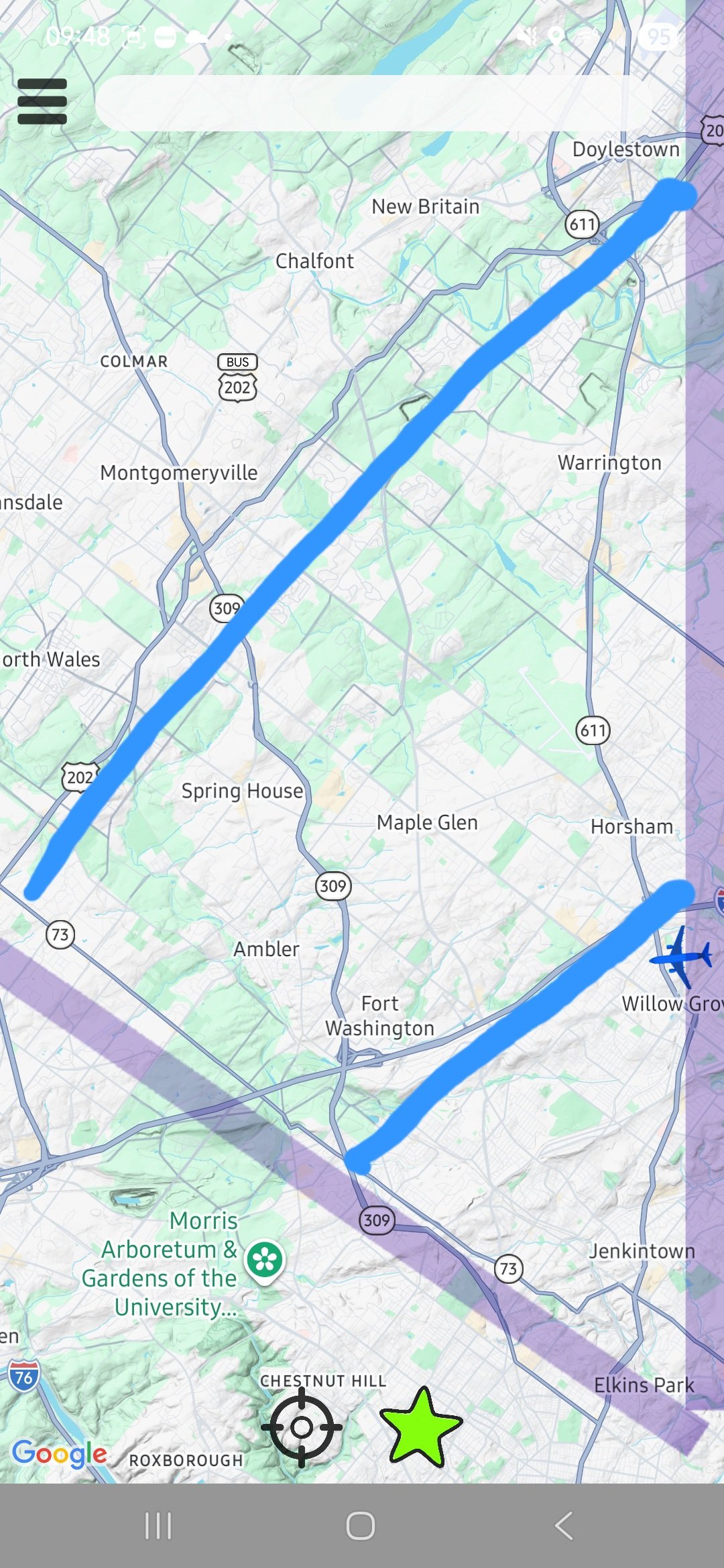
This object crossed the entire frame in under two seconds. What you are seeing is slowed to 1/8 speed. At real time it is invisible to the naked eye — a single flash of movement your brain never registers. This is why nobody sees them during the day.
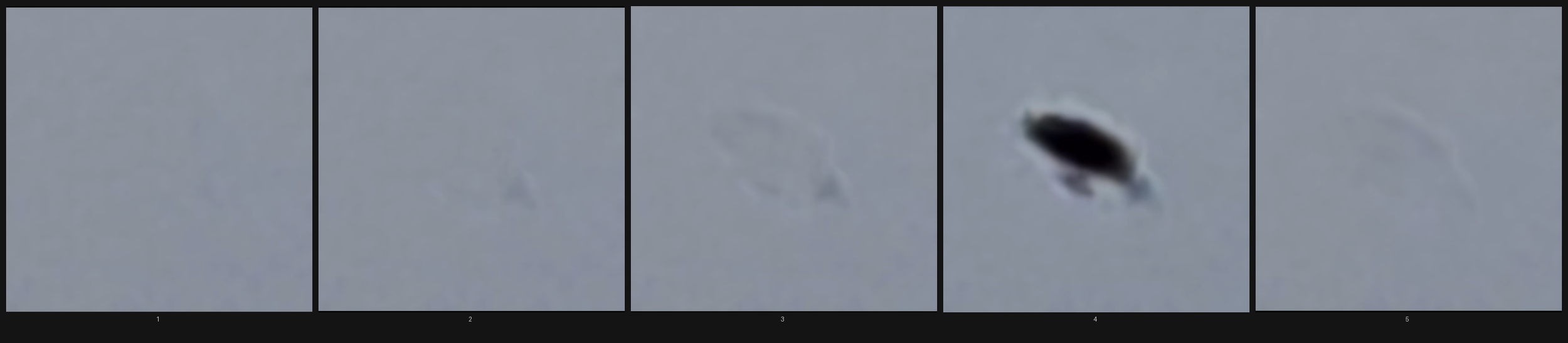
On the first frame you can barely see a hint of what I call the “Drill” then the second it becomes more apparent . On the third frame you can start to see the craft materialize as the “Drill” and what I call the “Pod” slowly get darker. The craft then pops into existence then leaves a ghostly residue of something.
What the Camera Feels**
Early in this program I noticed something unexpected. During certain events, my cameras exhibited visual distortions — sudden color shifts in the red and green channels, lens displacement, and frame-wide anomalies that had no obvious cause. I built a custom electromagnetic interference scanner to test whether these distortions correlated with object presence. They did. The scanner analyzes each frame independently, using only color channel data — no visual identification, no object tracking. When it flags a frame, it's reacting to electromagnetic conditions, not to what's visible on screen. In one case, the EMI signature persisted and peaked after the object had already exited the frame, suggesting a residual electromagnetic field dissipating on its own timescale. The camera doesn't just see these objects. It feels them.
You can see this effect for yourself. In the September 4 videos labeled Corridor Saturation and Formation, the color agitation is not momentary — it's constant. No lens flare. No camera malfunction. The electromagnetic environment in those sessions is persistently disturbed, consistent with sustained high-traffic activity in the corridor. The camera is reacting to something present in the airspace for the entire duration of the recording.
Knowing What's Supposed to Be There
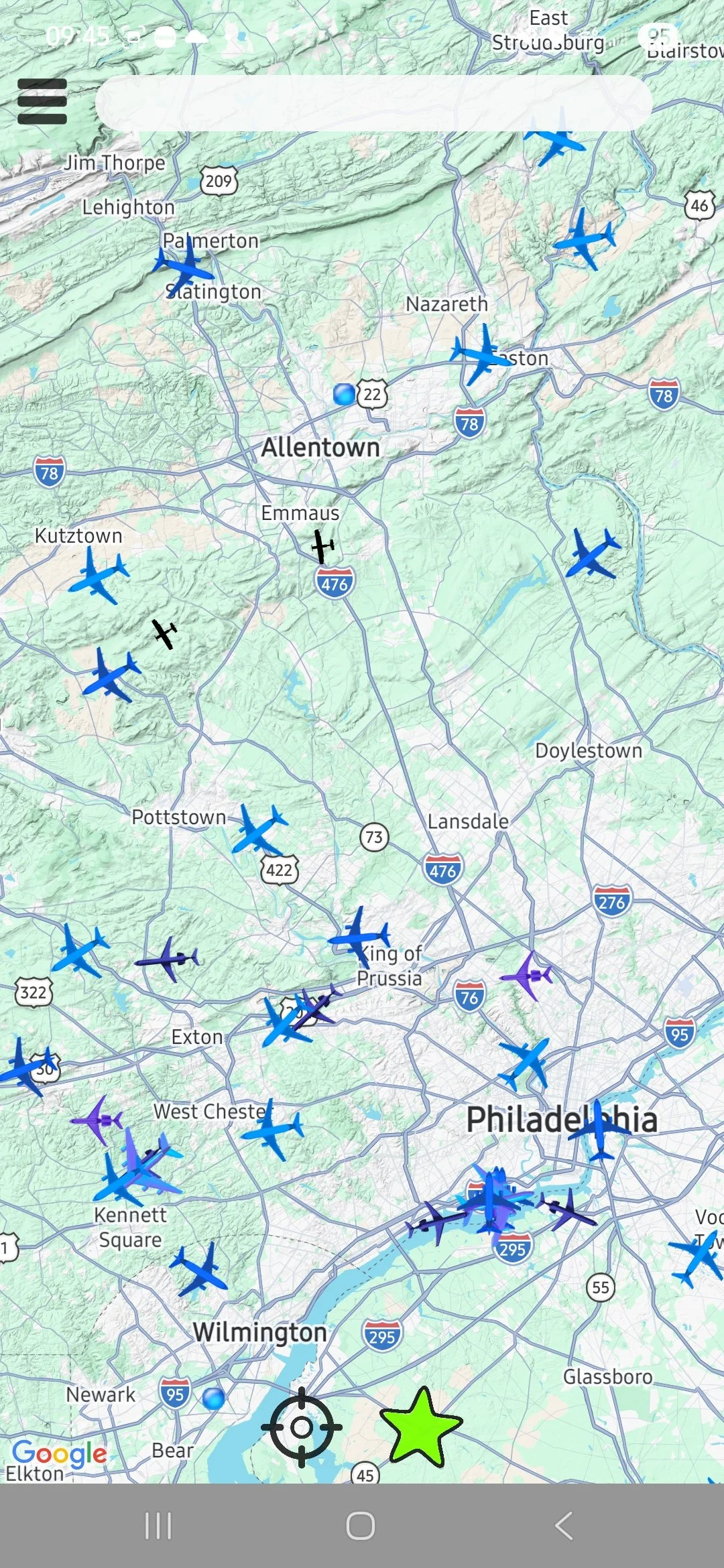
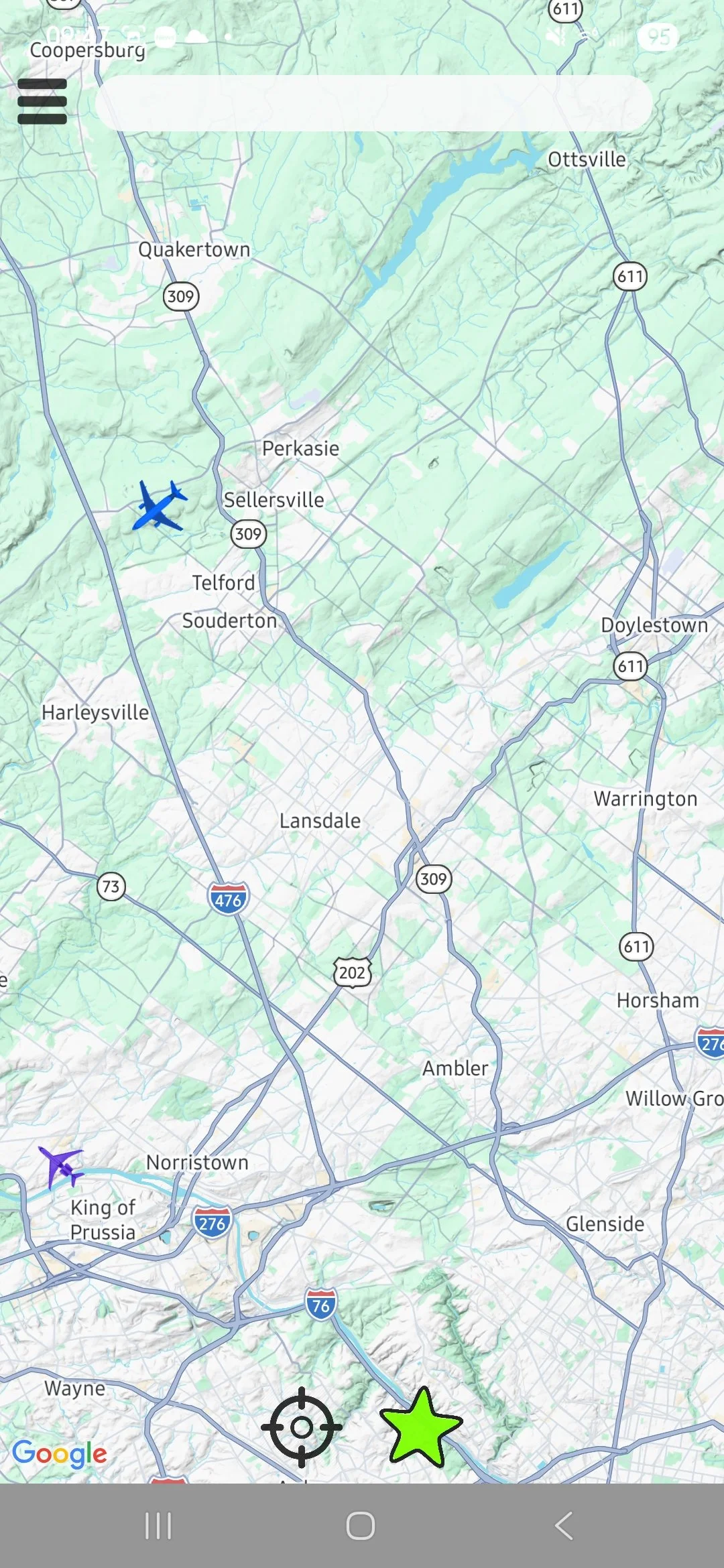
You cannot identify what doesn't belong in your sky unless you know exactly what does. I use FlightRadar24 to cross-reference every observation session against the recorded aircraft in my airspace. Commercial flights, military traffic, helicopter routes, survey aircraft — all of it is logged and compared against my footage timestamps. I document weather conditions for each session including cloud cover, visibility, wind speed and direction. I track recurring aircraft by tail number to identify patterns. I have logged over twenty-one recurring registrations and flagged at least one aircraft operating with no registration, no transponder, and a zeroed-out squawk code in a monitored military air corridor. If something is in my sky and it's not on FlightRadar24, that's not a glitch. That's a data point.